
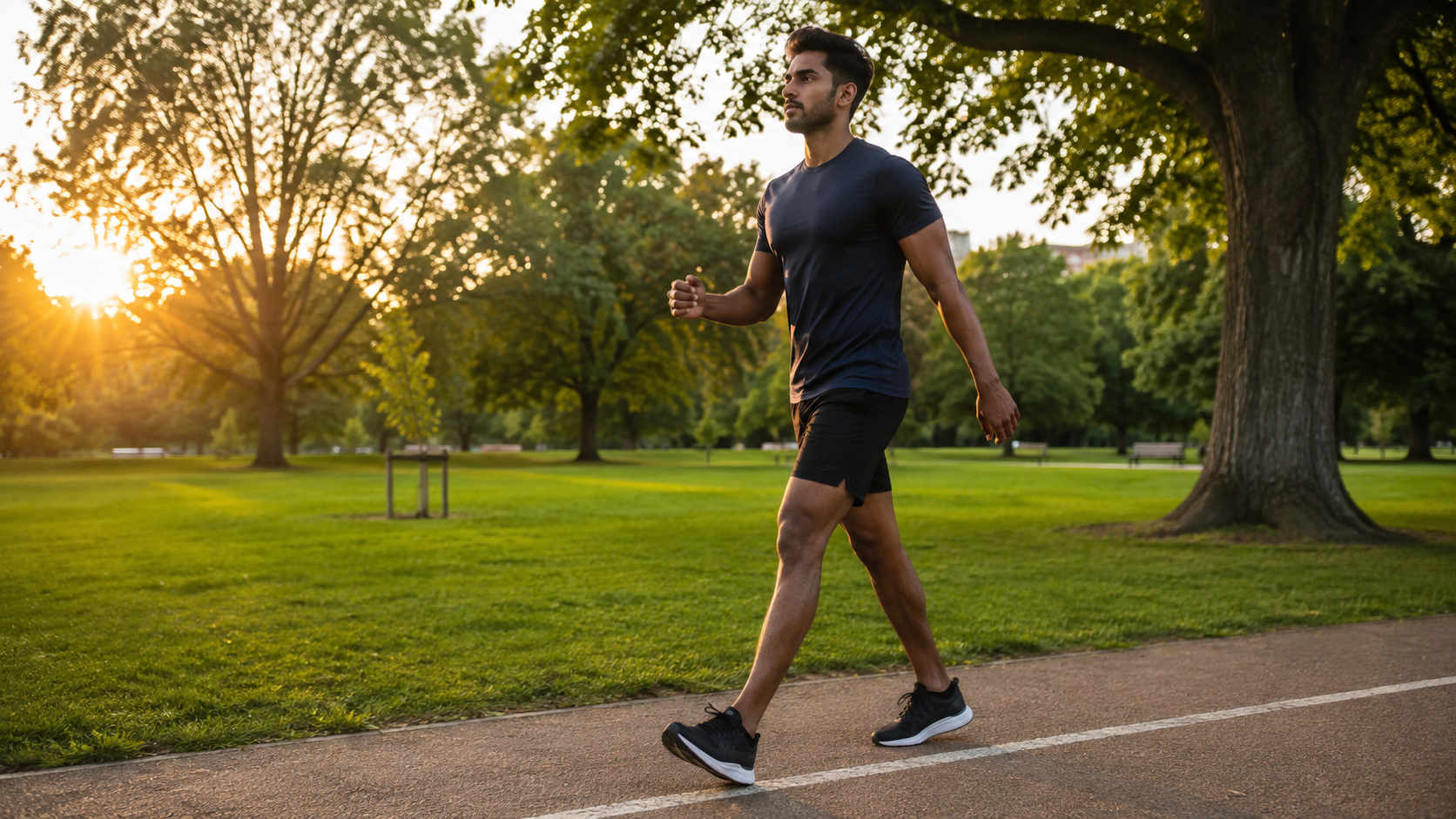
Walking is one of the simplest, safest and most effective forms of exercise available. Yet many people still ask how to lose weight by walking because they assume you need intense workouts or long hours in the gym to see results.
The truth is that how to lose weight by walking isn’t about taking the occasional stroll. It’s about walking with purpose, creating a calorie deficit, and building habits you can maintain for months rather than weeks. When done consistently, walking can help you burn calories, improve your cardiovascular fitness, preserve joint health and support sustainable fat loss.
One of the biggest advantages of learning how to lose weight by walking is that almost anyone can do it. Whether you’re completely new to exercise, returning after a break or simply looking for a low-impact way to become more active, walking can fit into your lifestyle without requiring expensive equipment or a gym membership.
Unlike many fitness trends, walking is supported by decades of scientific research. It can contribute to weight loss, improve heart health, help regulate blood sugar, reduce stress and increase your daily energy expenditure—all of which play an important role in long-term health.
If you’re wondering how to lose weight by walking, it’s also important to understand that success doesn’t come from a single long walk. Instead, it comes from combining regular walking with healthy nutrition, consistency and gradual progression over time.
In this guide, you’ll discover 11 proven tips that will teach you how to lose weight by walking more effectively. You’ll learn how often to walk, how fast to walk, how long your walks should last, common mistakes to avoid and simple strategies that can help you burn more calories without making exercise feel overwhelming.
By the end, you’ll have a clear plan that you can start using immediately to make walking a realistic and sustainable part of your weight loss journey.
Tip 1: Walk Consistently Every Week
The first step in learning how to lose weight by walking is understanding that consistency matters far more than perfection.
Many people go for one very long walk at the weekend before doing very little activity during the rest of the week. While this is certainly better than doing nothing, it isn’t the most effective strategy for long-term weight loss.
Walking regularly keeps your daily energy expenditure higher, helping you burn more calories across the week rather than relying on occasional bursts of activity.
Even shorter walks performed consistently can produce impressive results over time. For example, walking for 30 to 45 minutes five days each week often burns more total calories than completing one or two extremely long sessions before spending several days inactive.
If you’re serious about how to lose weight by walking, try scheduling your walks just as you would any other important appointment. Walking before work, during your lunch break or after dinner can make it much easier to stay consistent.
Remember that building a routine is often more important than chasing the perfect workout. A sustainable walking habit is far more valuable than an ambitious plan that only lasts a couple of weeks.
Walking also provides an excellent opportunity to increase your overall daily activity. Choosing the stairs instead of the lift, parking further away, or walking short journeys instead of driving all contribute towards your daily calorie expenditure.
If you’re new to fitness, don’t worry about walking for hours straight away. Start with a manageable amount that fits your schedule and gradually build from there.
The people who successfully learn how to lose weight by walking are rarely those who walk the hardest—they’re usually the ones who walk the most consistently.
Tip 2: Increase Your Daily Step Count
One of the easiest ways to improve how to lose weight by walking is by increasing the total number of steps you take throughout the day.
Many people focus only on their dedicated walking workout, but your overall daily movement—often referred to as non-exercise activity thermogenesis (NEAT)—can make a significant contribution to the number of calories you burn.
If you complete a 40-minute walk each morning but spend the rest of the day sitting, your total energy expenditure may still be relatively low. On the other hand, someone who walks regularly throughout the day, climbs stairs, stands more often and remains generally active can burn hundreds of additional calories without noticing a huge difference in effort.
Rather than aiming for a specific number like 10,000 steps immediately, focus on improving your own baseline. For example:
| Current Daily Steps | New Target |
| 3,000 | 5,000 |
| 5,000 | 7,000 |
| 7,000 | 9,000 |
| 9,000 | 11,000+ |
Gradually increasing your daily movement is a much more sustainable approach than trying to double your activity overnight.
If your goal is how to lose weight by walking, small lifestyle changes can make a surprisingly large difference over time. Consider:
- Walking while talking on the phone.
- Parking further from your destination.
- Taking the stairs instead of the lift.
- Walking during your lunch break.
- Getting off public transport one stop earlier.
- Going for a short walk after dinner.
These habits may seem minor individually, but together they can significantly increase your weekly calorie expenditure.
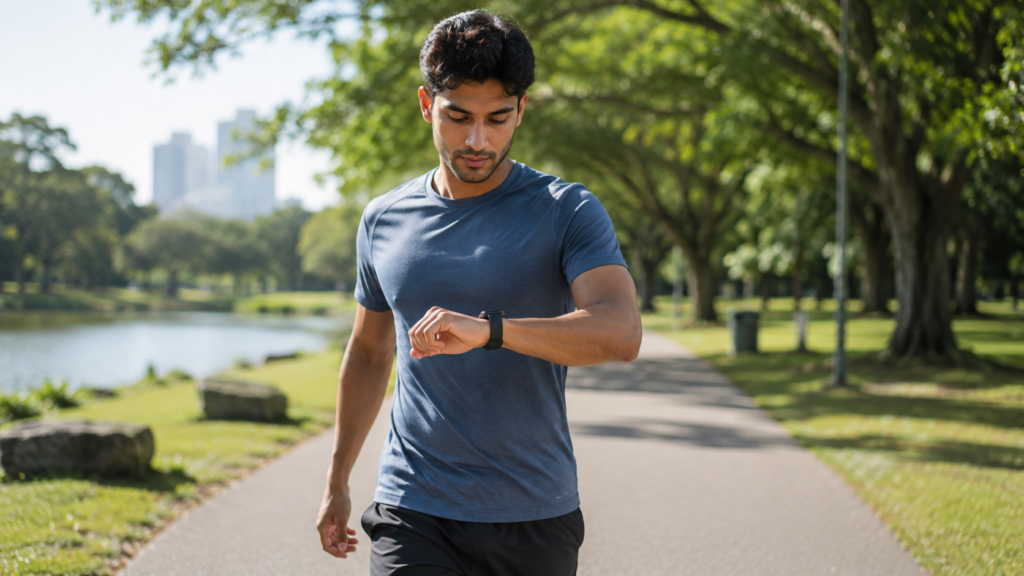
Using a smartwatch or step-counting app can also help you stay accountable. Seeing your daily step total encourages consistency and makes it easier to notice improvements over time. Instead of comparing yourself to other people, aim to beat your own average each week.
Most importantly, avoid becoming discouraged if you miss a day. Learning how to lose weight by walking isn’t about being perfect—it’s about consistently making better choices over weeks and months.
Tip 3: Walk at a Brisk Pace
Not all walking burns the same number of calories.
If you’re serious about how to lose weight by walking, walking speed plays an important role in how much energy you use.
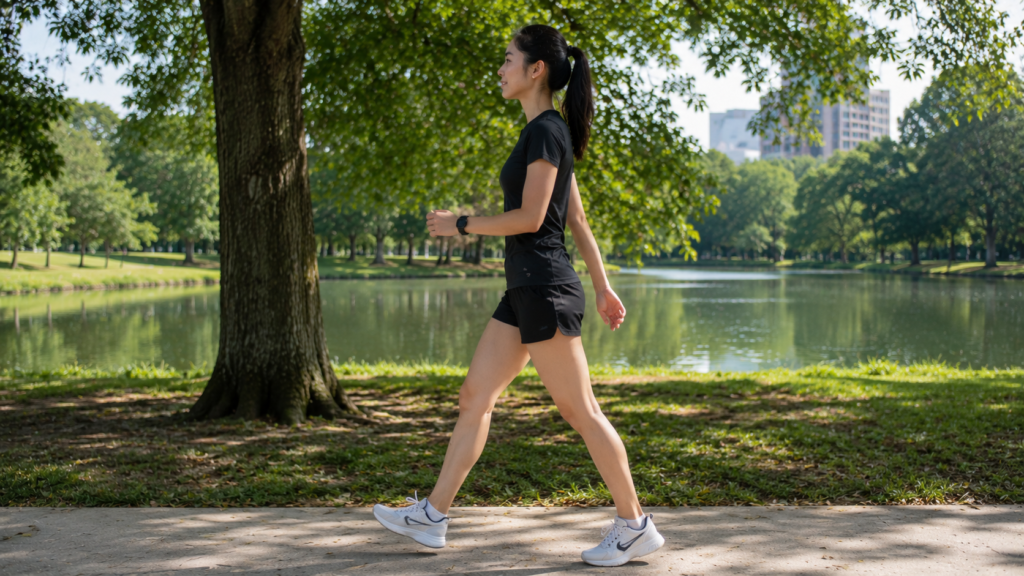
A leisurely stroll is excellent for relaxation and general health, but walking at a brisk pace increases your heart rate, challenges your cardiovascular system and helps you burn more calories in the same amount of time.
For most adults, a brisk walking pace is around 3 to 4 miles per hour (4.8–6.4 km/h). You should be breathing harder than normal while still being able to hold a conversation.
A simple way to judge your intensity is the “talk test”:
| Walking Intensity | Can You Talk? |
| Easy | Comfortable conversation with no effort |
| Brisk | Can talk, but singing would be difficult |
| Vigorous | Only short sentences before needing another breath |
Walking too slowly isn’t necessarily bad, especially if you’re just beginning your fitness journey. However, gradually increasing your pace allows you to burn more calories without needing to walk for much longer.
If you’re wondering how to lose weight by walking, one of the simplest improvements you can make is to slightly increase your pace during your normal walks.
Maintaining good posture can also improve your walking efficiency. Keep your head up, shoulders relaxed, arms swinging naturally and avoid looking down at your phone for long periods.
You don’t need to power walk everywhere, but aiming for a purposeful stride will help maximise calorie burn while remaining comfortable enough to sustain over longer distances.
Many people also find it motivating to measure their average pace using a fitness watch or smartphone app. Watching your pace improve over time is another excellent way to stay motivated while learning how to lose weight by walking.
Tip 4: Walk for Longer Sessions
While walking speed is important, the amount of time you spend walking also plays a major role in how to lose weight by walking.
The longer you walk, the more calories you burn. Although a brisk 20-minute walk is beneficial, extending that session to 45 or 60 minutes can significantly increase your total calorie expenditure without increasing the intensity.
One of the biggest advantages of walking compared with higher-impact exercise is that most people can comfortably walk for longer periods without excessive fatigue. This makes it much easier to accumulate a large number of calories burned across the week.
If your schedule allows, aim for walks lasting between 30 and 60 minutes on most days. Beginners can start with shorter sessions and gradually increase their duration by five to ten minutes each week.
Below is a simple guide:
| Walking Duration | Benefits |
| 20-30 minutes | Builds consistency and improves general fitness. |
| 30-45 minutes | Excellent for increasing daily calorie burn. |
| 45-60 minutes | Ideal for maximising calorie expenditure while remaining low impact. |
| 60+ minutes | Suitable for experienced walkers with enough recovery time. |
If you’re learning how to lose weight by walking, remember that two shorter walks can be just as effective as one long walk. For example, walking for 30 minutes before work and another 30 minutes after dinner may be easier to maintain than finding a full uninterrupted hour.
Breaking your walking into multiple sessions can also help you stay active throughout the day instead of spending long periods sitting.
Another benefit of longer walking sessions is that they often become mentally relaxing. Many people use this time to listen to music, podcasts or audiobooks, making it easier to stay consistent over the long term.
Ultimately, how to lose weight by walking isn’t about finding the perfect session length. It’s about finding a duration that fits your lifestyle and that you can repeat week after week.
Tip 5: Include Hills or Inclines
If you want to burn more calories without having to run, walking uphill is one of the most effective strategies.
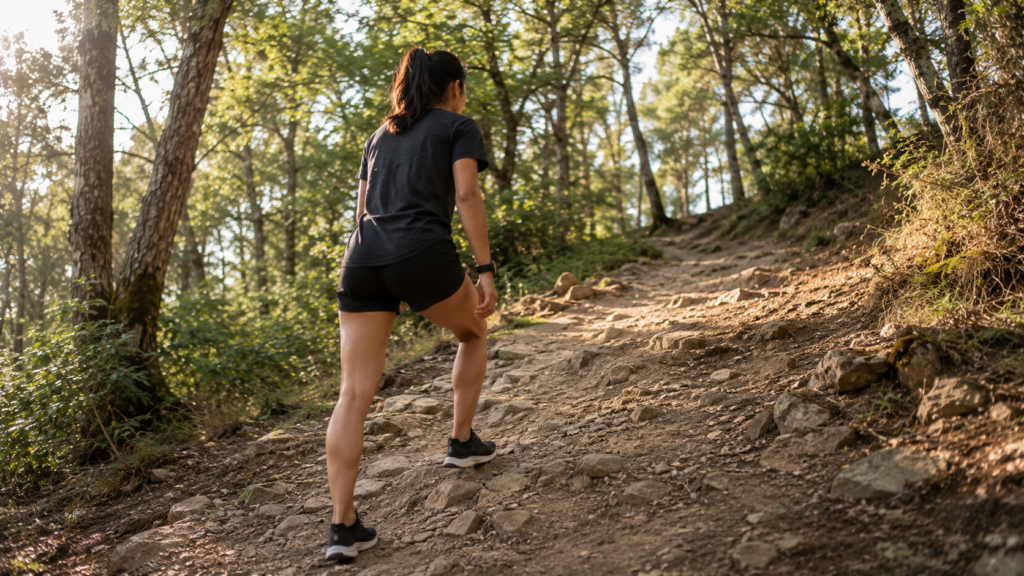
Adding hills or incline walking increases the amount of work your muscles perform, particularly your glutes, calves and quadriceps. As a result, your heart works harder and your calorie expenditure increases compared with walking on completely flat ground.
This makes incline walking an excellent option for anyone wanting to improve how to lose weight by walking while still keeping the exercise relatively low impact.
You don’t need to find a mountain to benefit. Small hills in your local park, gentle inclines around your neighbourhood or a treadmill incline at the gym can all provide an effective challenge.
Some benefits of incline walking include:
- Higher calorie burn than flat walking.
- Greater activation of the glutes and leg muscles.
- Improved cardiovascular fitness.
- Increased workout variety.
- Reduced boredom during longer walks.
If you’re using a treadmill, begin with a gentle incline of around 3–5% before gradually increasing it as your fitness improves.
When walking outdoors, focus on maintaining good posture. Avoid leaning too far forward or taking overly large steps when climbing hills. Instead, keep your stride natural and allow your arms to help generate momentum.
One of the easiest ways to improve how to lose weight by walking is to include just one or two hill sessions each week while keeping your other walks comfortable and sustainable.
Remember that the goal isn’t to make every walk as difficult as possible. Instead, small increases in intensity over time can produce excellent long-term results while reducing the likelihood of burnout or injury.
Tip 6: Swing Your Arms Properly
Many people overlook their upper body when walking, but using proper arm movement can improve your walking efficiency and slightly increase the number of calories you burn.
Although arm swing won’t transform how to lose weight by walking on its own, combining good walking technique with the other tips in this guide can make your workouts more effective.
When walking, allow your arms to swing naturally from your shoulders rather than keeping them stiff by your sides. Your elbows should remain bent at roughly 90 degrees, with your hands relaxed instead of clenched into fists.
Good arm movement helps:
- Improve balance and coordination.
- Encourage a quicker walking rhythm.
- Increase overall body movement.
- Make brisk walking feel more natural.
- Improve posture during longer walks.
Avoid crossing your arms across the front of your body, as this wastes energy and can reduce walking efficiency. Instead, keep your arm swing moving forwards and backwards in line with your direction of travel.
Many beginners also make the mistake of looking down at their phone while walking. Keeping your head up, eyes looking ahead and shoulders relaxed encourages better posture and makes breathing feel easier during longer sessions.
If you’re serious about how to lose weight by walking, paying attention to your technique can help you walk more comfortably and consistently over time.
Small improvements repeated every day often produce better long-term results than constantly searching for dramatic changes.
Tip 7: Combine Walking with Strength Training
Walking is excellent for burning calories, but combining it with resistance training can produce even better long-term weight loss results.
If you’re learning how to lose weight by walking, remember that exercise isn’t only about burning calories during the workout. Preserving muscle mass while losing fat is equally important.
Strength training helps maintain lean muscle during a calorie deficit while improving overall body composition. It can also make everyday activities feel easier by increasing your overall strength.
A simple weekly routine might look like this:
| Day | Activity |
| Monday | 45-minute brisk walk |
| Tuesday | Full-body strength workout |
| Wednesday | 45-minute brisk walk |
| Thursday | Full-body strength workout |
| Friday | 30-minute brisk walk |
| Saturday | Longer walk (60 minutes) |
| Sunday | Rest or gentle recovery walk |

This combination allows you to burn calories through walking while maintaining muscle through resistance training.
You don’t need an expensive gym membership to benefit. Bodyweight exercises such as squats, lunges, push-ups, glute bridges and planks can all help improve strength from home.
If you already have access to a gym, performing two or three resistance-training sessions each week alongside regular walking is often an excellent strategy for improving body composition.
Another advantage of strength training is that it supports everyday movement. Stronger muscles make walking feel easier, allowing you to walk for longer periods without becoming fatigued.
For anyone looking at how to lose weight by walking, combining regular walking with strength training is often far more effective than relying on cardio alone.
Remember, successful weight loss isn’t simply about becoming lighter—it’s about becoming healthier, stronger and more physically capable at the same time.
Tip 8: Create a Sustainable Calorie Deficit
No matter how effective your walking routine is, successful weight loss ultimately depends on creating a calorie deficit. This means your body uses more calories than it receives from food and drink over time.
Understanding this principle is one of the most important parts of learning how to lose weight by walking because walking alone cannot compensate for consistently eating more calories than you burn.
Fortunately, you don’t need an extreme diet. In fact, sustainable weight loss is usually achieved through small, realistic changes that you can maintain long term.
Some simple ways to create a calorie deficit include:
- Eating slightly smaller portion sizes.
- Prioritising lean protein with each meal.
- Choosing whole foods more often than highly processed foods.
- Drinking water instead of sugary drinks.
- Limiting unnecessary snacks between meals.
- Planning meals in advance to avoid impulsive food choices.
Combining these habits with regular walking is far more effective than relying on either nutrition or exercise alone.
If you’re wondering how to lose weight by walking, avoid making the mistake of eating back every calorie you think you’ve burned. Fitness watches and calorie-tracking apps provide useful estimates, but they aren’t perfectly accurate. Instead, use them as a guide while monitoring your body weight and progress over several weeks.
Another important point is patience. Healthy weight loss rarely happens overnight. Small calorie deficits maintained consistently are much easier to sustain than aggressive diets that leave you constantly hungry and increase the likelihood of regaining weight later.
Walking supports your calorie deficit by increasing your daily energy expenditure without placing excessive stress on your body. This is one of the reasons it’s such an effective long-term strategy for people of all fitness levels.
If your goal is how to lose weight by walking, think of nutrition and walking as partners rather than separate strategies. Together, they create a realistic approach that you can maintain for months and even years.
Tip 9: Wear the Right Footwear
One of the easiest mistakes to overlook when learning how to lose weight by walking is wearing unsuitable footwear.
Although walking is a low-impact activity, spending several hours each week on your feet can place repeated stress on your ankles, knees, hips and feet if your shoes don’t provide adequate support.
A good pair of walking or running shoes should feel comfortable from the first walk rather than needing to be “broken in.” They should provide enough cushioning to absorb impact while also offering good stability for your natural walking pattern.
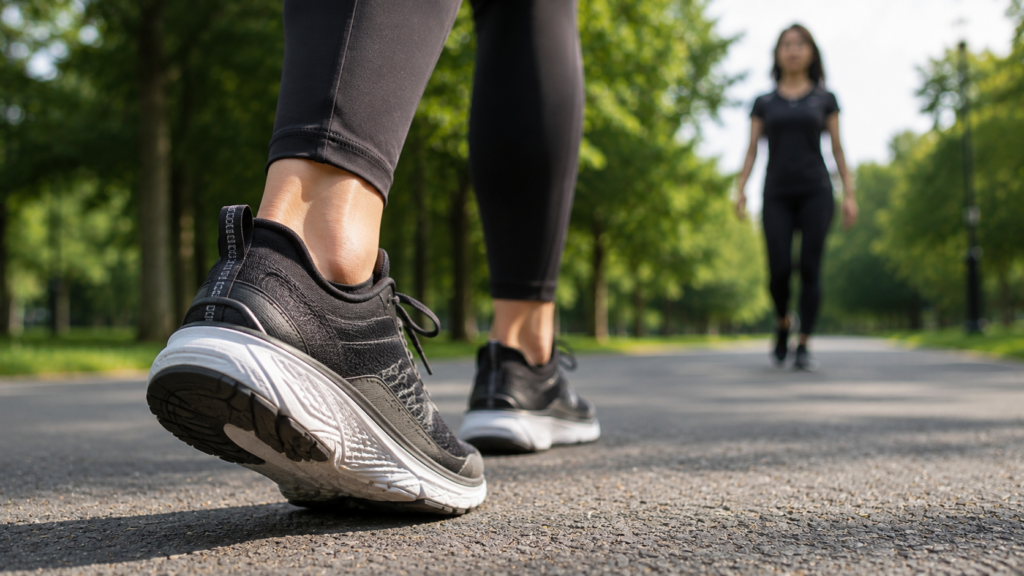
When choosing footwear, look for shoes that offer:
- Comfortable cushioning.
- Good arch support where appropriate.
- A secure heel fit.
- Enough room around your toes.
- Breathable materials.
- Durable grip for different surfaces.
You don’t necessarily need the most expensive trainers available. For many people, a well-fitting pair from a reputable sports brand will provide everything needed for regular walking.
It’s also worth replacing your shoes once they become excessively worn. Flattened cushioning and worn-out soles can reduce comfort and increase the likelihood of aches or minor overuse injuries during longer walks.
Proper footwear won’t directly determine how to lose weight by walking, but it can make staying consistent much easier. Comfortable shoes encourage longer, more enjoyable walks, while uncomfortable footwear often gives people excuses to skip sessions.
Remember that consistency remains the biggest factor in long-term success. Wearing shoes that allow you to walk comfortably week after week is a simple investment that supports your overall health and weight loss journey.
Tip 10: Track Your Progress
One of the biggest reasons people give up is because they don’t realise they’re making progress.
When learning how to lose weight by walking, it’s easy to focus only on the number on the scales. However, weight naturally fluctuates from day to day due to factors such as hydration, food intake and hormone levels. Judging your progress from a single weigh-in can therefore be misleading.
Instead, track multiple indicators of success, including:
- Body weight (once or twice per week under similar conditions).
- Daily step count.
- Walking distance.
- Walking pace.
- Time spent walking.
- Waist circumference.
- Progress photos taken every few weeks.
- How your clothes fit.
- Energy levels and fitness.
Recording these measurements allows you to see improvements that the scales alone might miss.
If you’re trying to master how to lose weight by walking, using a smartwatch or fitness app can also help you stay motivated. Watching your weekly step count increase or your average walking pace improve provides clear evidence that your fitness is progressing, even before significant weight loss occurs.
It’s also important to set realistic goals. Rather than aiming to lose a large amount of weight in a short period, focus on building habits you can maintain consistently.
For example, instead of saying:
“I want to lose 20 kg.”
Set process-based goals such as:
- Walk for 45 minutes five days each week.
- Reach 8,000-10,000 steps most days.
- Gradually increase your walking pace.
- Prepare healthy lunches for work.
These goals are completely within your control and naturally support long-term weight loss.
Another useful strategy is reviewing your progress every four weeks rather than every day. Looking at monthly improvements makes it much easier to appreciate how far you’ve come and prevents temporary fluctuations from affecting your motivation.
Ultimately, understanding how to lose weight by walking is about staying consistent long enough for your healthy habits to produce lasting results.
Tip 11: Stay Consistent for Long-Term Results
The final—and arguably most important—tip is consistency.
Every strategy in this guide, from increasing your step count to walking at a brisk pace, only works if you continue doing it over time.
Many people start a new walking routine full of motivation but quickly lose momentum because they expect immediate results. Healthy weight loss is rarely dramatic. Instead, it’s the result of hundreds of small decisions repeated day after day.
If you’re serious about how to lose weight by walking, focus on building a routine that fits comfortably into your lifestyle.
Some weeks you’ll have more free time than others. Work, family commitments, holidays or illness may occasionally interrupt your routine. That’s perfectly normal. Missing one or two walks won’t ruin your progress, but giving up entirely will.
One helpful mindset is to aim for consistency rather than perfection. If you can’t fit in your usual 60-minute walk, a 20-minute walk is still far better than doing nothing.
Remember that walking is one of the few forms of exercise you can continue throughout almost every stage of life. Because it’s accessible, affordable and low impact, it’s much easier to maintain than many high-intensity workout programmes.
As your fitness improves, you can gradually increase your pace, distance or walking frequency to continue challenging your body while keeping your routine enjoyable.
When people ask how to lose weight by walking, they’re often searching for a shortcut. In reality, the secret isn’t a special technique or expensive piece of equipment—it’s consistently putting one foot in front of the other while supporting your efforts with healthy nutrition and realistic lifestyle habits.
Over weeks and months, these small daily actions add up to meaningful improvements in your fitness, health and body composition.
Frequently Asked Questions
Can you really lose weight by walking?
Yes. Walking increases your daily calorie expenditure, helping create a calorie deficit when combined with a balanced diet. Learning how to lose weight by walking is about combining regular walking with sustainable eating habits and consistency over time.
How much should I walk each day to lose weight?
Most people benefit from walking for 30–60 minutes on most days of the week. The exact amount depends on your current fitness level, body weight and overall activity level.
Is walking every day better than running?
Not necessarily. Running burns more calories in less time, but many people find daily walking easier to recover from and maintain consistently. The best option is the one you can stick with long term.
What is the best walking speed for weight loss?
A brisk pace of approximately 3–4 mph (4.8–6.4 km/h) is ideal for most adults. You should be breathing harder than normal while still being able to hold a conversation.
Should I walk before or after eating?
Both can be effective. Many people enjoy walking after meals because it helps increase daily activity and may support blood sugar management, while others prefer walking before breakfast or before dinner depending on their schedule.
Does walking on a treadmill help with weight loss?
Yes. A treadmill can be just as effective as outdoor walking. Increasing the incline is an excellent way to burn more calories while keeping the exercise low impact.
Final Verdict
So, how to lose weight by walking isn’t about chasing a magic number of steps or completing exhausting workouts every day. It’s about combining consistent walking with healthy nutrition, gradual progression and habits you can realistically maintain.
Walking may seem simple, but that simplicity is exactly what makes it so effective. It burns calories, improves cardiovascular health, places relatively little stress on your joints and can fit into almost any lifestyle.
Whether you’re just beginning your fitness journey or looking for a sustainable way to become more active, learning how to lose weight by walking can provide long-lasting results without requiring expensive equipment or advanced training.
Start with manageable goals, increase your activity gradually and remain patient with the process. Over time, those daily walks can become one of the most powerful tools for improving your health, reducing body fat and maintaining your weight for years to come.