

Does walking count as cardio? Yes, walking counts cardio. Walking raises your heart rate, improves circulation, strengthens your heart and lungs, and burns calories. Whether you are taking a leisurely stroll or walking briskly, it is a form of cardiovascular exercise that can improve your overall health.
The amount of cardio benefit you get depends on your walking speed, the distance you cover, and how often you walk. Brisk walking provides greater cardiovascular benefits than a slow, casual pace, but both contributes to a healthier lifestyle.
In this article, we will explain the question: does walking count as cardio? Its health benefits, how fast you should walk, and how it’s compares to other forms of exercise.

What Makes an Exercise Cardio?
An exercise is considered cardio, or cardiovascular exercise, when it increases your heart rate and breathing for a sustained period. This challenges your heart, lungs, and circulatory system, making them stronger and more efficient over time.
Does walking count as cardio? Walking meets these requirements because your muscles need more oxygen as you move. Your heart pumps faster to deliver oxygen-rich blood throughout your body, while your lungs work harder to supply that oxygen. Even a moderate walk can improve cardiovascular fitness when done regularly.
Health experts generally recommend at least 150 minutes of moderate-intensity aerobic activity each week, and brisk walking is one of the easiest ways to achieve this goal. It’s suitable for people of almost all ages and fitness levels and requires little more than a comfortable pair of shoes.
Benefits of Walking as Cardio
Walking is one of the most accessible forms of cardiovascular exercise and offers a wide range of health benefits. Unlike many high-impact workouts, walking is gentle on the joints while still improving your overall fitness.
Some of the key benefits of walking include:
Improved heart health: Regular walking helps strengthen your heart, improve circulation, and may reduce the risk of heart disease.
Better weight management: Walking burns calories and, when combined with a balanced diet, can help you maintain or lose weight.
Increased stamina: As you walk more often, your endurance improves, making everyday activities feel easier.
Improved mental well-being: Walking can reduce stress, improve your mood, and help relieve symptoms of anxiety and depression.
Stronger muscles and bones: Walking works your legs, core, and supporting muscles while helping maintain healthy bones.
Even walking for 20 to 30 minutes a day can make a noticeable difference to your physical and mental health over time. The key is consistency rather than intensity.

How Fast Should You Walk for Cardio?
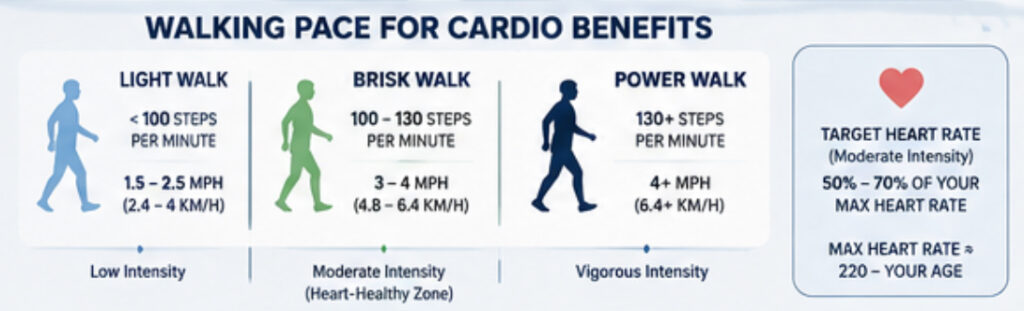
Many people ask, “Does walking count as cardio?” The answer is yes, as long as you walk at an intensity that raises your heart rate. The speed you walk determines how much of a cardiovascular workout you get. A slow, relaxed stroll is still beneficial, but a brisk walk is more effective for improving heart health and fitness.
A brisk walking pace is generally around 3 to 4 miles per hour (5 to 6.5 km/h), or any speed where you notice your breathing becoming faster but you can still hold a conversation. This level of effort is known as moderate-intensity exercise.
If you’re just starting out, don’t worry about walking at a specific speed. Begin at a comfortable pace and gradually increase your speed and duration as your fitness improves. Even short walks throughout the day can add up and provide meaningful health benefits.
For an extra challenge, try walking uphill, increasing your pace, or adding intervals where you walk quickly for one or two minutes before returning to a normal pace. These techniques can increase your heart rate and improve your cardiovascular fitness even further.
Can Walking Help You Lose Weight?
Yes, walking can help you lose weight when combined with a healthy, balanced diet. Walking burns calories, and consistently burning more calories than you consume can lead to weight loss over time.
The number of calories you burn depends on factors such as your weight, walking speed, distance, and the terrain. Walking uphill or increasing your pace can help you burn even more calories.
While walking alone may not produce dramatic results overnight, it is one of the easiest habits to stick with because it requires no special equipment or gym membership. Many people find that regular walking not only helps with weight management but also improves their energy levels and overall health.
For the best results, aim to walk most days of the week and gradually increase the duration or intensity of your walks as your fitness improves.
Walking vs Running: Which is Better for Cardio?
Both walking and running are excellent forms of cardiovascular exercise, but the better choice depends on your fitness level, goals, and personal preferences.
Running burns more calories in a shorter amount of time and can improve cardiovascular fitness more quickly. However, it also places greater stress on your joints and muscles, which may not be suitable for everyone.
Walking is a lower-impact exercise that is easier on the knees, hips, and ankles. It is an excellent option for beginners, older adults, people recovering from injuries, or anyone looking for a sustainable way to stay active.
The most effective exercise is the one you can do consistently. So does walking count as cardio? If you enjoy walking and can make it part of your daily routine, it can provide significant long-term health benefits. As your fitness improves, you may even choose to combine walking with jogging or running for an extra challenge.

Frequently Asked Questions
Is walking every day enough exercise?
For many people, yes. Walking every day can help improve heart health, boost your mood, increase endurance, and support weight management. Aim for at least 30 minutes of brisk walking on most days for the greatest health benefits.
Does slow walking count as cardio?
Yes, slow walking is still a form of cardiovascular activity, although it provides a lower-intensity workout. Increasing your pace to a brisk walk will raise your heart rate more and offer greater cardiovascular benefits.
How long should I walk for cardio?
Health experts recommend at least 150 minutes of moderate-intensity aerobic exercise each week. This can be achieved by walking for 30 minutes a day, five days a week.
Can walking replace running?
For many people, yes. While running burns more calories and is more intense, walking is easier on the joints and is a sustainable way to improve cardiovascular health. The best exercise is one that you can stick with consistently.
Conclusion
Does walking count as cardio? Walking is much more than a simple daily activity—it is an effective form of cardiovascular exercise that can improve your heart health, increase endurance, support weight management, and boost your overall well-being. Whether you’re just beginning your fitness journey or looking for a low-impact way to stay active, walking is an excellent choice.
The key to getting the most out of walking is consistency. Aim to walk regularly at a pace that raises your heart rate, and gradually increase your distance or speed as your fitness improves. Even small changes to your daily routine, such as taking a brisk walk during your lunch break or choosing the stairs instead of the lift, can have a positive impact on your health over time.
Remember, every step counts. By making walking a regular habit, you’re investing in a healthier heart and a healthier future.
Walking isn’t the only effective form of cardio. If you’re considering the pool instead, read our guide on “Is Swimming Cardio?” to see how the two compare.